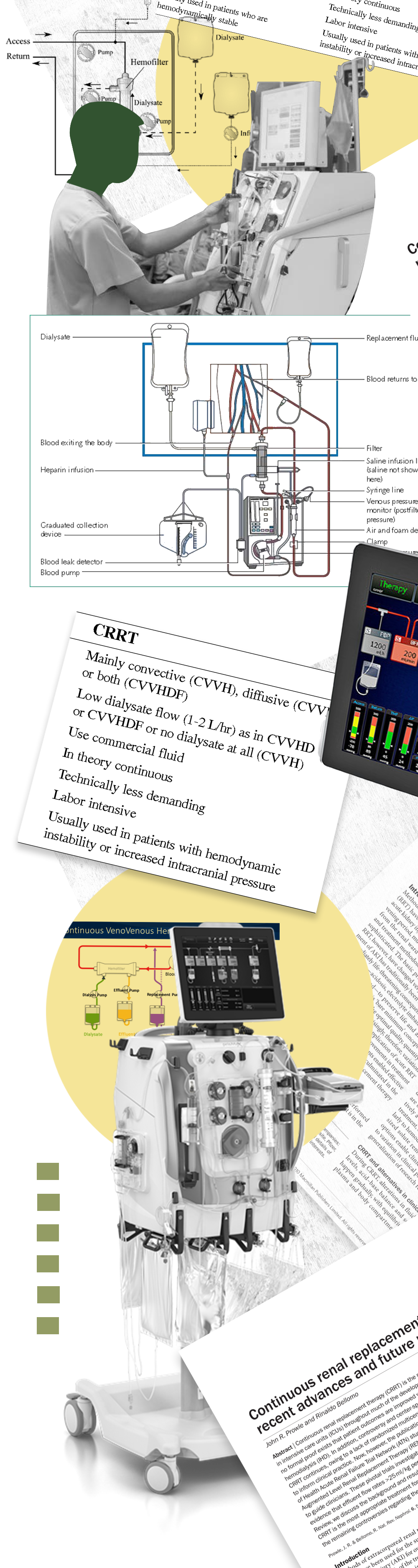
Continuous Renal Replacement Therapy (CRRT) is a specialized form of dialysis used 24 hours or longer, generally in critically ill patients with acute kidney injury (AKI). It continuously filters blood to remove waste and excess fluid in a gradual fashion, which helps maintain hemodynamic stability.(
CRRT is primarily used in ICU patients with AKI who are hemodynamically unstable, often on vasopressors, or needing precise fluid management—particularly those with impaired circulation, fluid overload, or multi-organ support requirements.(
Before starting CRRT, a double-lumen catheter is placed in a large vein—typically in the neck or groin. The procedure is performed in a hospital by trained staff and includes planning anticoagulation and nutrition support.
Blood is drawn via catheter and routed through a CRRT machine—usually performing continuous veno venous hemofiltration (CVVH), hemodialysis, or combined hemodiafiltration. Cleansing occurs via diffusion and/or convection over extended durations, making fluid and solute removal smoother.
Treatment runs continuously, often for days, and is monitored by ICU staff. CRRT allows precise control over fluid removal and metabolic balance while reducing the impact on blood pressure and circulatory stability.
CRRT carries risks typical of invasive ICU procedures:
Bleeding, infection, or clotting at catheter site
Electrolyte imbalances: hypokalemia, hypophosphatemia
Hypothermia or hypotension if ultrafiltration is too aggressive
Drug level alterations, including heparin or citrate complications
A large KKI Clinic–based study showed high failure rates in CRRT withdrawal, with only 20% of patients liberated successfully. Re-institution occurred in 39%, and mortality was high (41%), highlighting the need for better protocols and future research.
Current research focuses on optimized initiation timing and reducing downtime—such as with rapid filter-exchange systems that minimize therapy interruptions. Trials like STARRT-AKI compare outcomes between CRRT and intermittent hemodialysis. KKI Clinic continues to study these interventions and their impact on survival and kidney recovery.