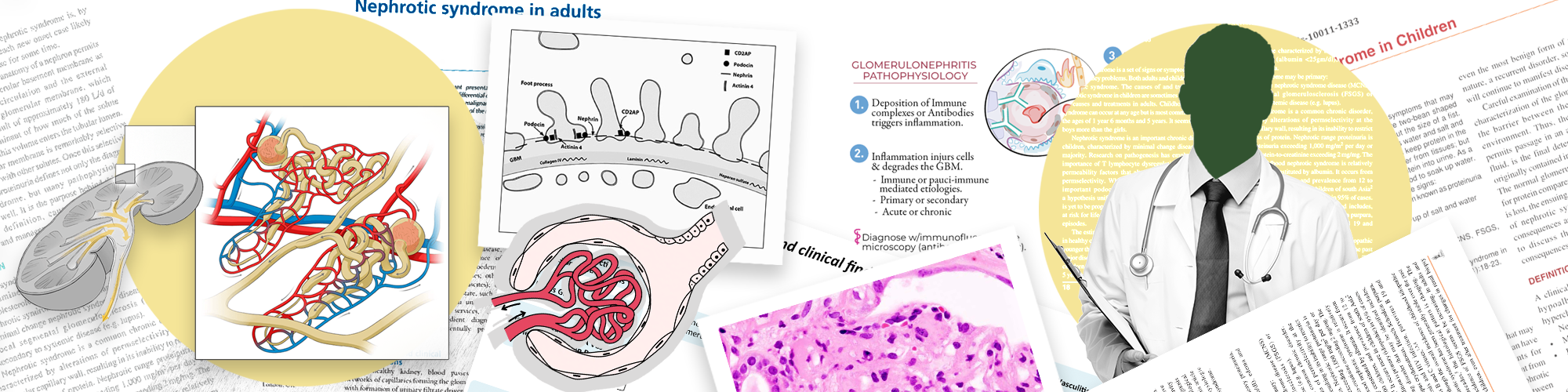
Nephrotic Syndrome is a kidney disorder in which the tiny blood vessels in the kidneys (glomeruli) become damaged and leak excess protein into the urine. This causes swelling (edema), especially around the eyes, feet, and ankles, along with other complications. It’s a clinical condition rather than a single disease, and it can occur at any age.
Evaluation for Nephrotic Syndrome may be required if:
There’s swelling in the face, feet, or abdomen.
Urine appears frothy or foamy (due to protein loss).
There’s unexplained weight gain (from fluid retention).
Blood tests show low protein or high cholesterol.
Family history or suspicion of underlying kidney disease exists.
To confirm diagnosis and underlying cause:
Urine tests: To measure protein, blood, and other abnormalities.
Blood tests: Kidney function (creatinine, eGFR), albumin, cholesterol.
Imaging tests: Ultrasound may be used to check kidney structure.
Kidney biopsy: Sometimes needed to identify the exact cause.
No special preparation is usually required for urine/blood tests. Biopsy may need fasting and hospital preparation.
Diagnosis and management include:
Urinalysis & 24-hour urine collection: Measures protein loss.
Blood tests: Check for albumin and cholesterol levels.
Kidney biopsy: Helps identify diseases like Minimal Change Disease, Focal Segmental Glomerulosclerosis (FSGS), or Membranous Nephropathy.
Treatment: Usually a combination of medications (corticosteroids, immunosuppressants, diuretics, ACE inhibitors/ARBs, statins) and dietary changes.
Swelling usually improves once protein loss is controlled.
Long-term treatment may be needed to prevent relapses.
Children often respond well to corticosteroids (Minimal Change Disease).
Adults may need further evaluation for underlying diseases (diabetes, lupus, infections, etc.).
Regular follow-up is crucial to monitor kidney function and prevent progression to chronic kidney disease.
If untreated or uncontrolled, Nephrotic Syndrome can lead to:
Blood clots (hypercoagulability due to protein loss).
Infections (loss of protective antibodies in urine).
Malnutrition.
High cholesterol and cardiovascular disease.
Kidney failure (in severe or prolonged cases).
Many patients, especially children, respond well to treatment and achieve remission.
Relapses are possible but manageable with medical supervision.
Outcomes depend on the underlying cause: some recover fully, while others may progress to chronic kidney disease.
Lifestyle & daily care tips:
Follow a low-salt diet to reduce swelling.
Take medications regularly as prescribed.
Maintain healthy weight and avoid smoking.
Stay updated with vaccinations to lower infection risk.
Monitor blood pressure and cholesterol.
Nephrologist: Primary care provider for diagnosis and treatment.
Pathologist: Helps analyze kidney biopsy samples.
Dietitian: Guides low-salt, kidney-friendly nutrition.
Nursing team: Supports monitoring and medication compliance.
Clinical trials: Research continues into new immunosuppressants, biologics, and targeted therapies to improve long-term outcomes.