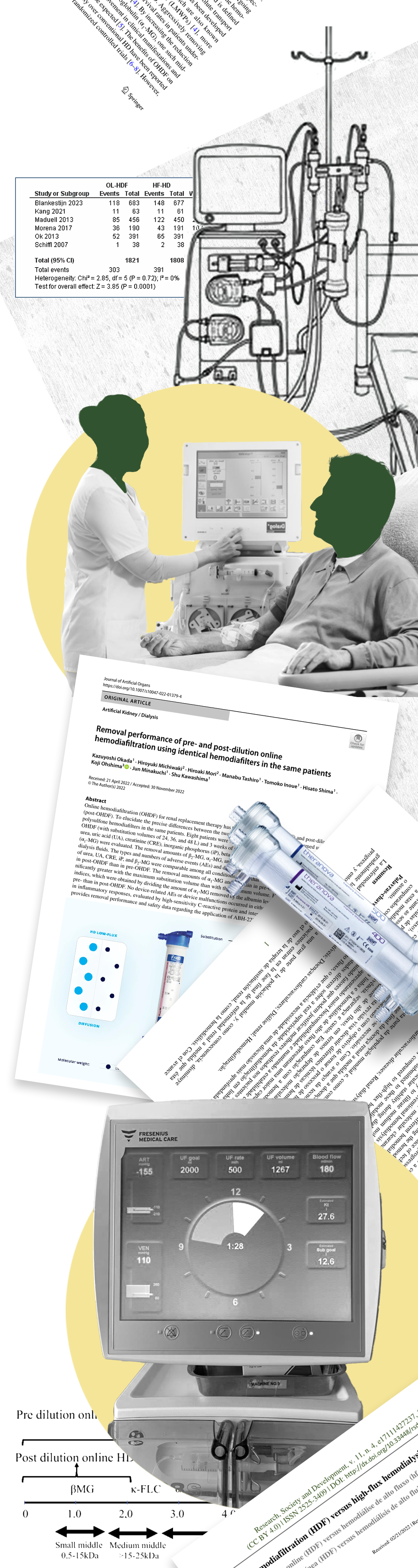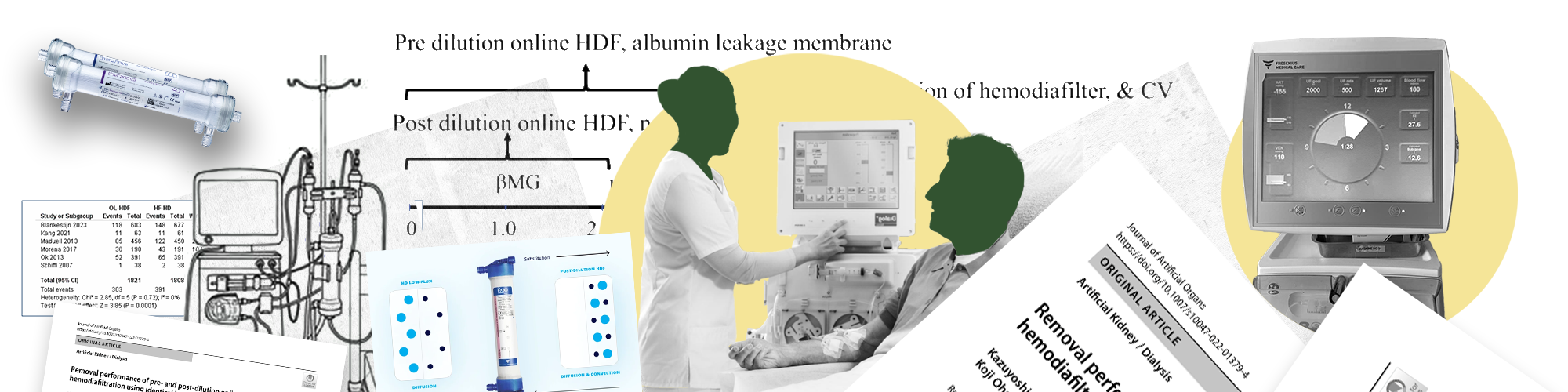
Online Hemodiafiltration (HDF) combines diffusion and convection to remove a broader spectrum of uremic toxins than conventional dialysis. During treatment, large volumes (~20–30 L per session) of ultrapure substitution fluid—produced in real-time from dialysate—are infused to enhance clearance. This modality offers superior biocompatibility and overall blood purification.
OL HDF was developed to address limitations of conventional low- and high-flux hemodialysis—especially in removing middle to large molecular weight toxins, reducing inflammatory reactions, and improving cardiovascular stability. It's often applied in patients undergoing long-term dialysis who need enhanced toxin removal and improved quality of life.
OL HDF uses standard high-flux dialyzers and requires ultrapure water and dialysate quality. Membrane and ultrafilter systems produce sterile, pyrogen-free substitution fluids in real time (usually post-dilution). Replacement fluid volume is closely matched to ultrafiltration (20–30 L/session) for effective solute removal.
Patients typically undergo thrice-weekly sessions of 4–5 hours each. OL HDF delivers high convective volumes, leading to improved clearance of urea, phosphate, β₂-microglobulin, and middle molecules. It is well tolerated and maintains hemodynamic stability compared to traditional dialysis.
Post-dilution OL HDF provides multiple advantages over regular HD:
Reduced all-cause and cardiovascular mortality in select trials
Fewer episodes of intradialytic hypotension and better hemodynamic stability
Improved anemia management and nutritional status
Less inflammation and vascular calcification
Higher quality of life and better growth outcomes in pediatric ESRD patients
Cost & Infrastructure: Requires specialized ultrafilters, ultrapure fluid, and upgraded water treatment infrastructure
Albumin Loss: Mild hypoalbuminemia can occur with high convection volumes
Access Needs: High blood-flow vascular access is essential to deliver sufficient convection volume
Observational and RCT data (e.g. ESHOL trial) show reduced mortality risk when high convection volumes are achieved
Dialysis adequacy (spKt/V, URR) and nutritional markers (albumin, hemoglobin, nPCR) improve significantly compared to HD alone
However, some trials show no significant difference in 90-day kidney recovery compared to HD, indicating selection bias and reliance on convection dose
Key focus: defining optimal convection dose threshold (around ≥23 L per session) for maximal patient benefit
Researchers are exploring long-term cardiovascular, metabolic, and mortality outcomes with standardized high-convective OL HDF protocols
Emerging interest in combining OL HDF with biochemical and regenerative medicine strategies to reduce long-term dialysis complications.