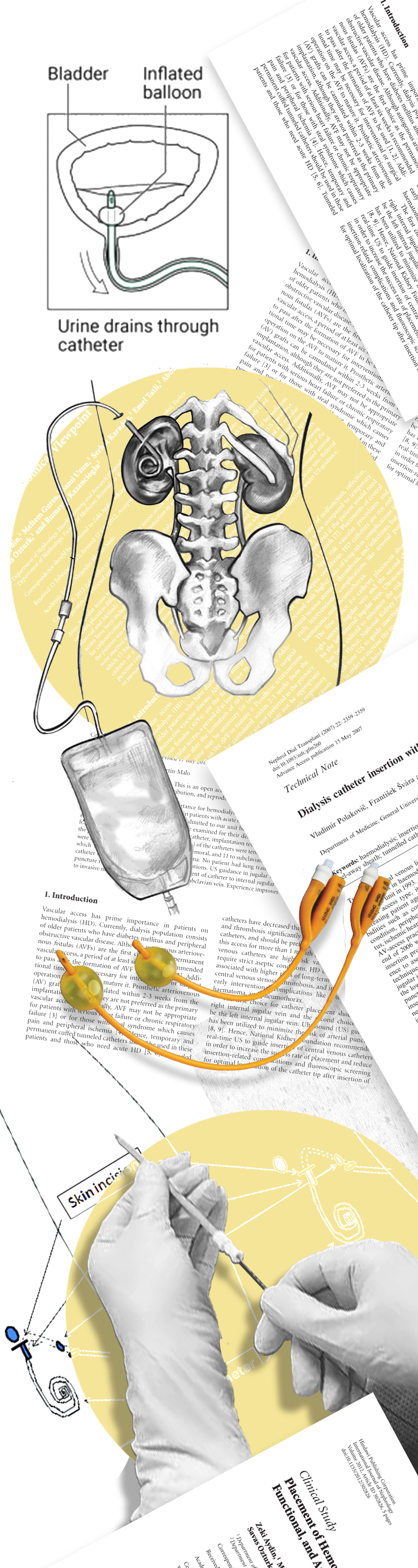
Perma catheter insertion refers to the placement of a tunneled dialysis catheter used for long-term vascular access in patients undergoing hemodialysis, especially when arteriovenous (AV) fistulas or grafts are not viable. These catheters are placed in a large central vein, commonly the internal jugular vein, and tunneled under the skin to reduce infection risk. Unlike temporary catheters, they are designed for extended use (weeks to months).
Perma catheters are typically used:
When urgent dialysis is needed and other access types aren't ready.
When AV fistula/graft creation is not possible due to vascular issues.
In patients awaiting maturation of a newly created AV access.
For patients requiring long-term dialysis but are not candidates for AV access.
A physical exam and vascular mapping (via ultrasound) may be done.
Blood tests to assess clotting and infection risk are required.
Fasting may be advised a few hours before the procedure.
Internal jugular vein (preferred)
Subclavian or femoral vein (less common due to higher complication risks)
Done under local anesthesia with light sedation.
A small incision is made near the clavicle for the tunneled entry.
The catheter is advanced into a central vein using fluoroscopy (live X-ray) to ensure accurate placement.
The outer exit site is placed on the chest wall, secured with sutures and a sterile dressing.
The procedure usually lasts 30–60 minutes.
Dialysis can begin shortly after placement if needed.
The site must be kept dry and clean; dressing changes are done regularly.
Most patients can return to normal activity in 1–2 days but must avoid heavy lifting or swimming.
Possible complications include:
Infection at the insertion or tunnel site
Catheter dysfunction due to clotting or kinking
Bleeding or hematoma at the site
Pneumothorax (lung injury) if nearby structures are punctured
Venous stenosis (narrowing of central veins)
While not ideal for long-term use, perma catheters offer:
Immediate access to life-saving dialysis
Reasonable durability for several weeks or months
Reduced infection risk compared to non-tunneled catheters
Long-term outcomes depend on catheter care, patient hygiene, and eventual transition to AV fistula/graft.
Antimicrobial locking solutions may be used to prevent infection/clotting.
Daily hygiene, keeping the site clean and dry is essential.
Avoid manipulation or accidental pulling of the catheter.
Monitor for signs of infection like fever, redness, or discharge.
Nephrologist: Oversees overall dialysis care and access decisions.
Interventional Radiologist or Surgeon: Performs the insertion.
Dialysis Nurse: Manages dressing changes and catheter care during sessions.