
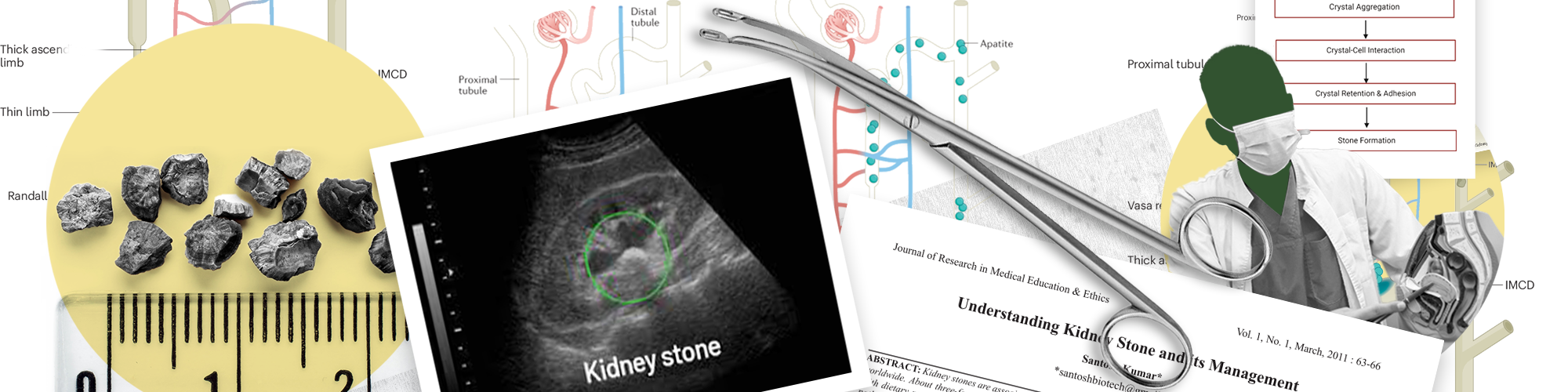
Kidney stones are hard deposits made of minerals and salts that form inside your kidneys. They develop when urine becomes concentrated, allowing minerals to crystallize and stick together. Stones can vary in size — from tiny grains to larger formations — and may remain in the kidney or travel through the urinary tract.
Evaluation and treatment for kidney stones are necessary when you experience:
Severe, sharp pain in the back, side, or lower abdomen
Blood in urine (hematuria)
Nausea or vomiting with pain
Recurrent urinary tract infections (UTIs)
Difficulty passing urine or reduced urine output
Prompt diagnosis helps prevent complications such as infection, kidney damage, or blockage of the urinary tract.
Preparation: Drink plenty of fluids before imaging tests (unless advised otherwise).
Access Types:
Ultrasound
X-ray (KUB)
CT scan
Urine and blood tests to identify causes of stone formation
Treatment depends on stone size, type, and location:
Small Stones: May pass naturally with increased fluid intake and pain management.
Larger Stones:
Extracorporeal Shock Wave Lithotripsy (ESWL) – uses sound waves to break stones
Ureteroscopy – removes or fragments stones via a thin scope inserted through the urethra
Percutaneous Nephrolithotomy (PCNL) – surgical removal through a small incision in the back
Medications – to relax ureters or prevent stone recurrence
During: Imaging and minimal or moderate anesthesia for most procedures
After: Pain relief medication, hydration, and short recovery time for non-invasive methods; surgical methods may require a brief hospital stay
Follow-Up: Stone analysis to prevent recurrence
Pain or discomfort during stone passage
Urinary tract infection
Bleeding in the urinary tract
Kidney damage (rare)
Stone recurrence if preventive measures aren’t followed
Stone removal relieves pain and prevents complications
High success rates with ESWL and ureteroscopy for most stones
Preventive strategies reduce recurrence risk by up to 50%
Drink at least 2–3 liters of water daily
Reduce salt and high-oxalate foods (e.g., spinach, nuts)
Maintain balanced calcium intake
Follow prescribed medications for stone prevention
Urologist – diagnosis, surgical treatment, and follow-up
Nephrologist – evaluates underlying causes, prevention strategies
Dietitian – guides dietary changes to prevent recurrence
Research & Trials – Advances in minimally invasive procedures and stone analysis are ongoing to improve outcomes
