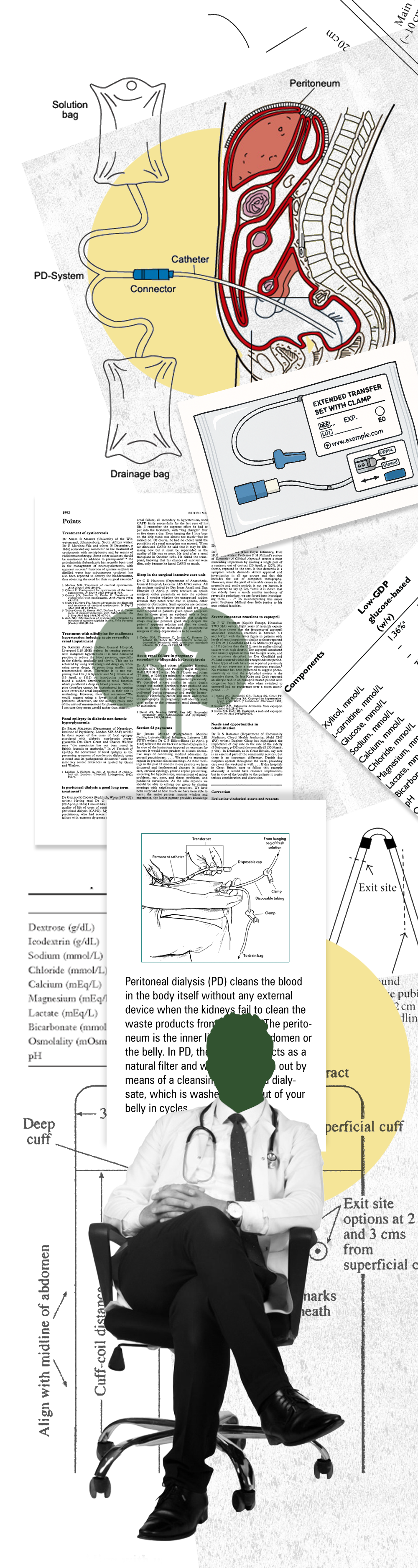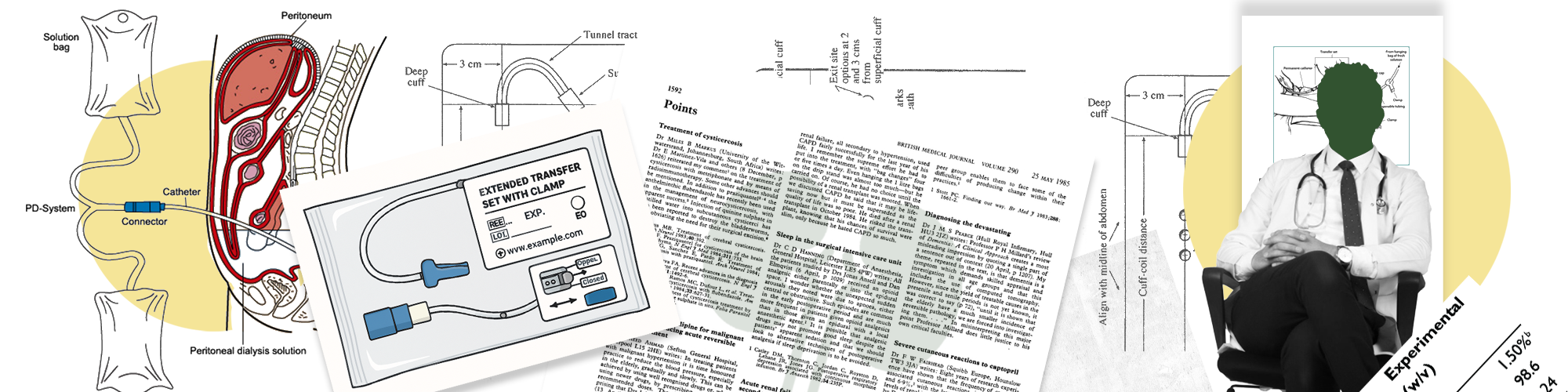
Peritoneal dialysis (PD) cleans the blood in the body itself without any external device when the kidneys fail to clean the waste products from the body. The peritoneum is the inner lining of the abdomen or the belly. In PD, the peritoneum acts as a natural filter and wastes are taken out by means of a cleansing fluid called dialysate, which is washed in and out of your belly in cycles.
Before starting the peritoneal dialysis, one has to undergo surgery to place a catheter (soft tube) in the abdomen. After blood tests and physical examination, catheter placement is planned. Catheter placement should be done at least 3 weeks before starting the first exchange. Catheter placement can be done through the skin, by open surgery, or laparoscopically. This can be done under local anesthesia or general anesthesia based on the technique of catheter placement.
A cut is made under general anesthesia below the belly button and the catheter is sent through this cut into the peritoneal cavity. The cut is closed by sutures and it is tested by using saline to check for any leakages. PD catheters are available in various shapes consisting of a flexible silicone tube with an open end and any side holes. Two cuffs are present in the tube to hold the catheter in place and to ward off infection.
After the catheter placement, one has to wait at least 15 to 20 days for healing of the catheter site. After the site heals, the exchange process can be carried out based on the type of PD chosen like CAPD or APD. The type of PD depends on the patient’s choice and their medical condition.
During each procedure, sterile cleansing fluid containing water, salt, and other additives is sent into the abdomen through this tube to filter the blood from a bag. This solution is called the dialysate. This solution filters the waste products from the blood vessels in the abdomen. As your blood flows naturally through the area, extra fluid and waste products are pulled out of the blood vessels and into the belly area by the dialysate (almost like a magnet). The solution is present in the body for about 4-6 hours. This period is called dwell time. After filtration of the blood, the fluid is drained through the catheter into the bag. The repeated process of sending the dialysate into the peritoneum to filter the blood and discard the filtered products collected in the blood is called the exchange.
Peritoneal dialysis can be done almost anywhere if you have the supplies required to perform the treatment.
There are two kinds of peritoneal dialysis:
Continuous Ambulatory Peritoneal Dialysis (CAPD) is the dialysis procedure where a person can continuously move while the exchange goes on. CAPD can be self-done without using any machines. Each exchange occurs for about 30-40 minutes and one can continue their activities of daily living while the exchanges happen. These exchanges have to be done about 4 times a day.
The procedure is done by placing about two quarts of cleansing fluid into your belly and later draining it. This is done by hooking up a plastic bag of cleansing fluid to the tube in your belly. Raising the plastic bag to shoulder level causes gravity to pull the fluid into your belly. When empty, the plastic bag is removed and thrown away.
Automated Peritoneal Dialysis (APD) usually is done at night while you sleep. A machine called the cycler does the exchange process about 3-5 times at night. There will be a fresh solution in the belly after exchanges at night. This procedure is also called continuous cycler-assisted PD.
Both these procedures can be done at home or the workplace in a clean area or even when traveling. The main difference between the two types of PD is the time and the way of exchange of the solutions. CAPD is done by hand at any time while APD is done by a machine at night.
PD is indicated in individuals with kidney diseases. It is the treatment of choice for those with end-stage kidney disease. It is also indicated in
Individuals who cannot bear hemodialysis due to needle anxiety
Individuals who cannot get proper blood vessel access for hemodialysis
Individuals with blood vessel disease called peripheral vascular disease or bleeding disorders
Individuals with heart conditions like congestive heart failure, prosthetic valvular disease, or poorly functioning heart.
Very young children between ages 0-5 years
Metabolic disorders like diabetes
Long-standing infections
PD is not indicated in long-standing and uncorrected abdominal wall hernias, adhesions of the abdominal walls, digestive system disorders, and when there is a medical device called the pleuro-peritoneal shunt.
The most important complication associated with the procedure is the risk of infection of the peritoneum called peritonitis. This can be reduced by following the hand-washing protocol, and keeping the entry port of the catheter clean.
Using sugars in the dialysate can lead to the body absorbing the sugars. This leads to weight gain and altered sugar levels in the body.
Hernia development occurs as a complication of PD due to long-standing fluids in the body that can weaken the abdominal muscles.
Infection of the skin, blood, and/or peritoneum (belly area)- if left untreated, these can cause sepsis (a life-threatening condition leading to multiple organ failure).
Fatigue (feeling tired)- This can affect anyone but is usually more common for people who have been on dialysis for a long time. It is often hard to tell for sure if this is a side effect of the dialysis or a symptom of long-term kidney disease.
Pruritus- itchy skin that people with kidney disease may experience, especially in more advanced stages of CKD and people on dialysis. Like fatigue, it is often hard to tell for sure if this is a side effect of the dialysis or a symptom of long-term kidney disease.
Every person responds differently to dialysis, and your level of risk for each side effect will differ from others. If you have concerns about any of these risks, talk to your doctor and dialysis team about ways you can lower your risk. Although these side effects may sound scary, they should be compared to the risks that come from continuing to live with untreated kidney failure.
PD has many advantages
It is a safe, and effective procedure for removing waste from the body
It is more convenient and gives the freedom of doing it in any clean place. PD can be done at home or the workplace in a clean area or even when traveling.
It does not need to place any needles in the blood vessel.
It has relatively fewer side effects than hemodialysis
Most people on dialysis are able to keep a regular routine except for the time needed for treatments. Dialysis often makes people feel better because it helps clear the waste products that have built up in the blood between treatments. However, some people report feeling tired after dialysis, especially if they have been getting dialysis treatments for a long time.
People receiving dialysis treatments also need to be mindful of what they eat. The specific meal plan recommended for you may vary depending on which type of dialysis you receive. Work with your kidney dietitian to create a meal plan that fits your routine and lifestyle.
Traveling is also a possibility for people on dialysis. Dialysis centers are in every part of the United States and many other countries. The treatment is standardized. You must make an appointment for dialysis treatments at another dialysis center before you go. The staff at your current center may help you make the appointment. Visit the NKF Travel Tips AtoZ page for more information.
Many people on dialysis can go back to work after they have gotten used to dialysis. However, if your job has a lot of physical labor (heavy lifting, digging, etc.), you may need to look for a different type of work. Visit the NKF Working with Kidney Disease AtoZ page for more information.
It will likely take you and your family some time to get used to including dialysis treatments into a new routine.